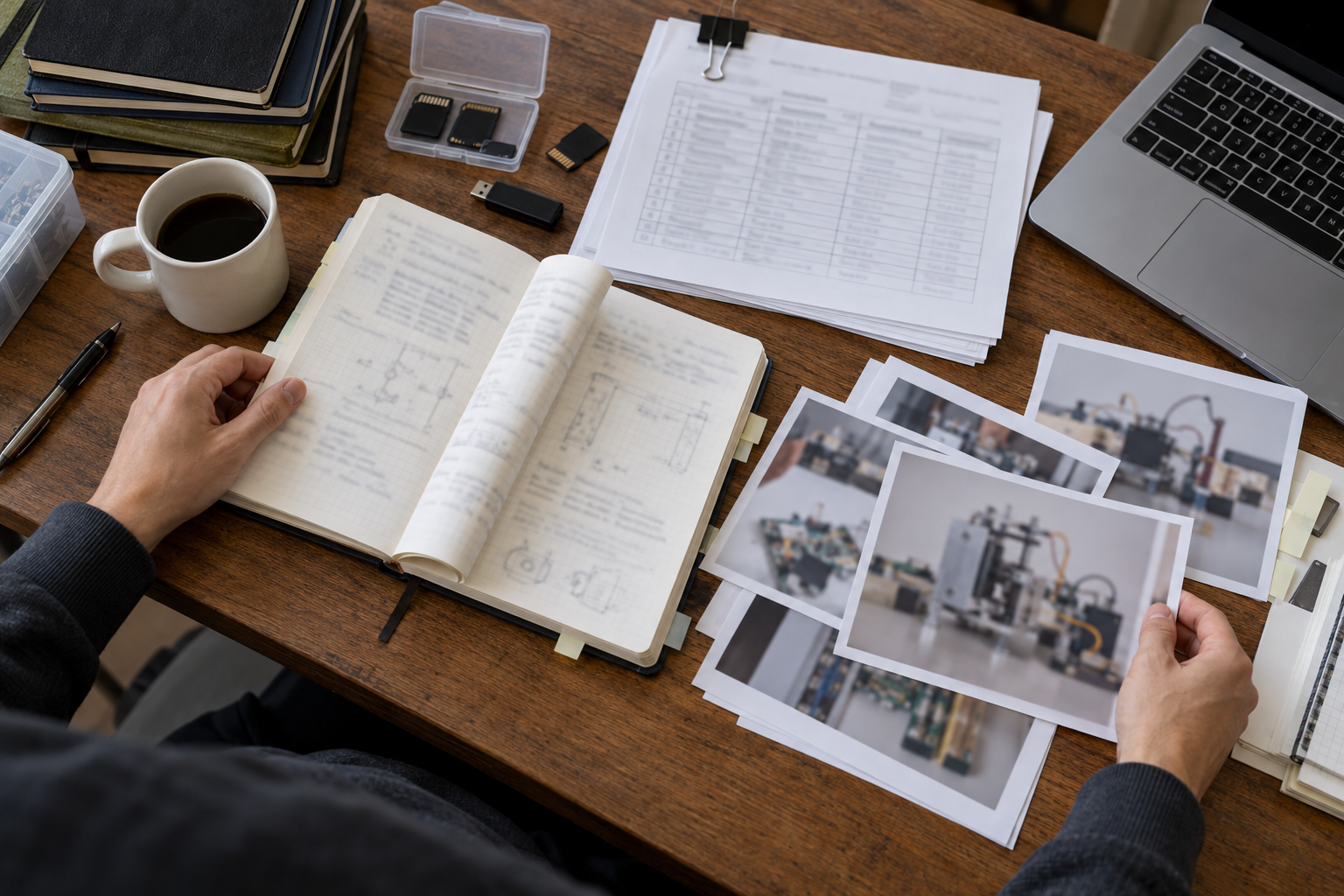
Build a record set around the inventive work
Include records that explain conception, development, contributors, tests, decisions and filed material. Exclude unrelated personal data and convenience copies. A well-scoped archive supports internal continuity, but it does not decide inventorship or create a patent filing date.
A research team has bound notebooks, instrument exports, prototype photographs, meeting notes and a draft disclosure. The record owner inventories each item, records its contributor and purpose, and separates administrative material from the technical record.
Run the control in five steps
- 01Identify the invention project, responsible owner and legal contact.
- 02Inventory notebooks, drawings, test evidence, disclosures and contributor records.
- 03Map each item to a creator, date range, version and current location.
- 04Exclude unrelated personal, HR and financial material.
- 05Approve one record-set register before encryption or handoff.
Preserve the decision trail
Record project, item ID, creator, date range, file or notebook location, version, inclusion reason, access group, authoritative source and reviewer.
Stop and investigate when
- No one can explain which copy is authoritative.
- Contributor or date information is missing.
- The archive contains unrelated personal records.
State what encryption does not prove
Does not replace provider permissions, guaranteed backup, password recovery or enterprise identity management. It also does not determine inventorship, patentability, filing priority, evidentiary weight or disclosure authority. Obtain appropriate counsel.
Invention notebook security questions
Does a notebook prove inventorship?
Not by itself. Inventorship is a legal determination tied to claimed subject matter.
Should every draft be retained?
No. Apply the organization’s legal, research-integrity and records rules.
Sources for this decision
Links support specific boundaries and do not imply endorsement.